
 English
 Arabic
 Bosnian
 Chinese (Simplified)
 Czech
Czech Dutch
Dutch Filipino
 French
 German
 Hawaiian
 Hmong
Hmong Italian
 Korean
 Malagasy
 Maltese
 Portuguese
 Russian
 Shona
Shona Spanish
 Swedish
 Thai
Thai Turkish
 Uzbek
Uzbek Yoruba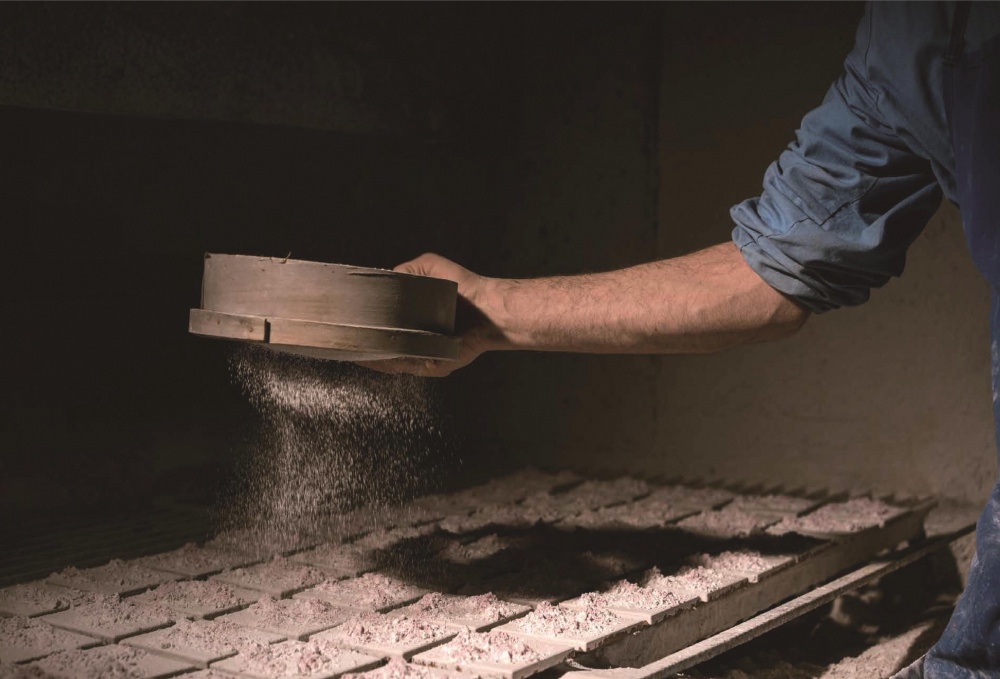
But what actually goes into making these tiny pieces of art? And how have Chinese manufacturers managed to dominate the global supply chain? This article takes a deep dive into the technical production process of ceramic mosaics and the industrial powerhouses driving this innovation.
The Technical Production Process of Ceramic Mosaics
Contrary to popular belief, creating a ceramic mosaic is not simply about cutting large tiles into small squares. Modern production is a sophisticated chemical and mechanical process that has evolved significantly from the ancient arts. Here is a step-by-step breakdown of how modern ceramic mosaics are made.
1. Raw Material Preparation and Body Formation
The foundation of any high-quality ceramic mosaic is the “body” or “biscuit.” The primary raw materials include clays, feldspar, silica, and kaolin. These are meticulously weighed and mixed to create a consistent batch. As seen in major manufacturing clusters like Foshan, the mixture is then pressed into shape using high-pressure hydraulic presses, forming the individual tiles or sheets.
2. The Art of Glazing
The glaze is what gives a mosaic its color, shine, and protective layer. However, modern glazing is no longer just about dipping tiles in a bucket. As highlighted in recent patent literature, advanced techniques involve a multi-layered approach.
For example, to achieve specific aesthetic effects like a “black frame” or crystalline appearance, manufacturers now use complex layering systems. This often involves applying a black underglaze, followed by an intermediate layer that reacts during firing, and finally a top coat (often a Ga-Ba series glaze) that ensures the ceramic inks develop properly and the surface remains fine and matte where required .
3. Digital Decoration and Inkjet Printing
Perhaps the biggest revolution in the industry over the last decade has been the adoption of digital printing. Older methods relied on screen printing or hand-placing colored pieces. Today, advanced inkjet printers apply high-fire ceramic toners directly onto the tile surface or onto decals.
This technology allows for photorealistic images, wood grains, and stone looks to be applied to mosaic surfaces with stunning accuracy. Once the pattern is printed using ink-jet technology, the tiles are sent through a kiln for high firing, which vitrifies the glaze and bonds it permanently to the body, ensuring the design does not wear off like with lesser dye-sublimation methods .
4. Precision Cutting and Assembly
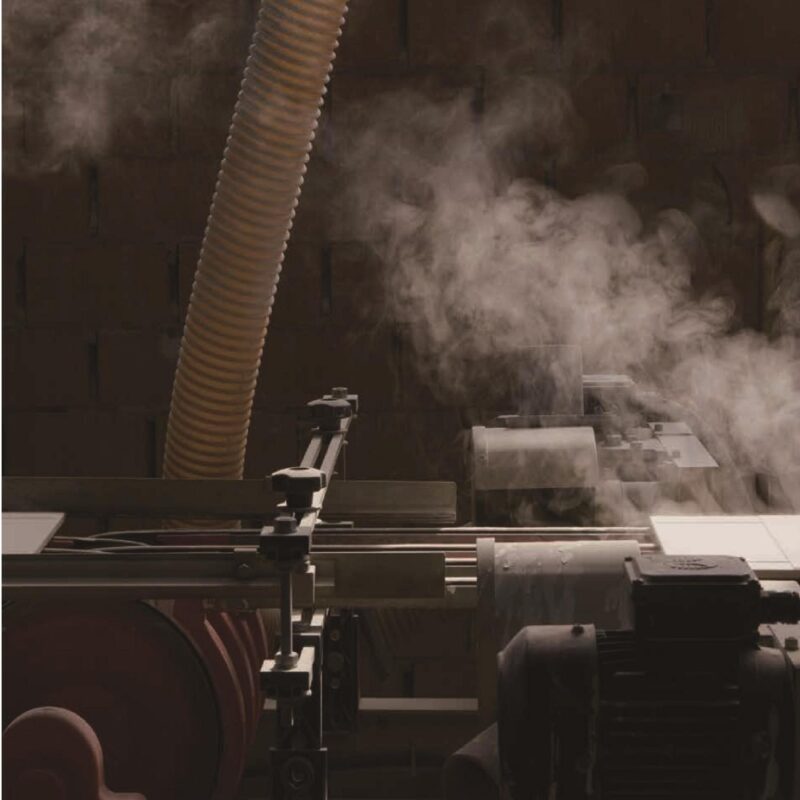
After firing, large sheets of decorated ceramic are cut into the final mosaic pieces using waterjet or laser cutting technology . These tiny pieces are then assembled by hand or machine onto mesh backing sheets. The mesh allows for easy installation, as contractors can lay down an entire sheet of mosaics at once rather than placing hundreds of individual tiles.